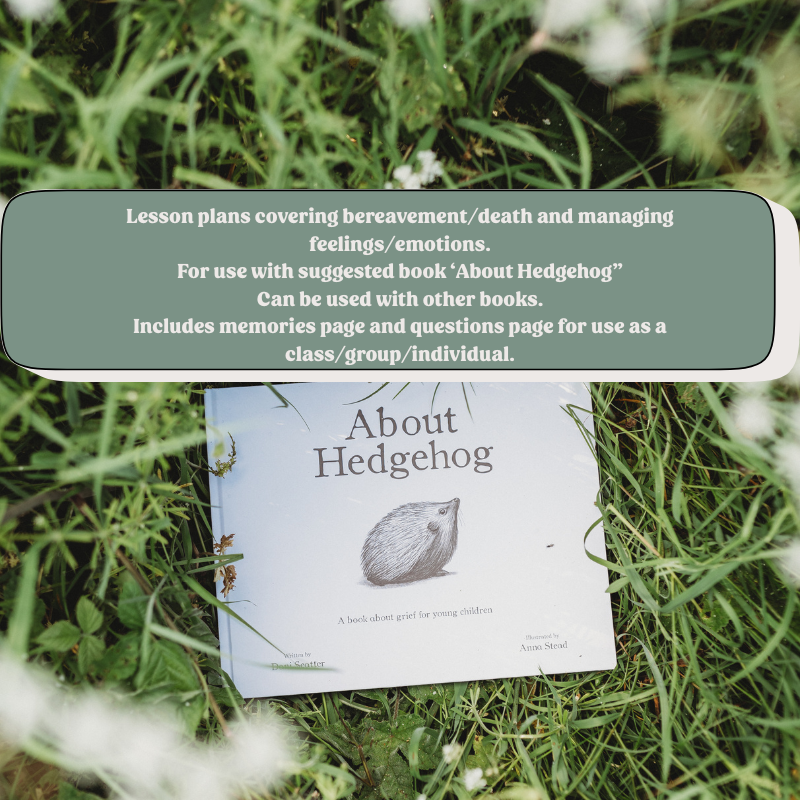
It’s been pretty big news recently that grief education will now be included in the new statutory guidance on Relationships, Health and Sex Education in schools and is vital bereavement support for children. This is a really big step in helping children cope with grief, death and bereavement. Death is a really difficult topic and one which many adults find challenging to talk about and it can therefore be difficult to know how to start those conversations. Our book ‘About Hedgehog’ is written to support families and professionals working with children in understanding death and bereavement and in managing their emotions and feelings in relation to this.
We have developed three lesson plans for EYFS, KS1 and KS2, designed especially to work with our childhood bereavement support book ‘About Hedgehog’, (they can be used with other age-appropriate bereavement books).
The key things to remember when talking to children about death and bereavement are:
- Use factually correct words, such as died and death – using language such as ‘loss’ or ‘passing away’, can be really confusing for young children.
- Having timely conversations is imperative – children can often pick up that something is going on, so having conversations early is important and helps to reinforce that they are not alone.
- Age and capacity to understand dictates how much information to share about what has happened – allow children to take the lead.
- Find a variety of ways to manage grief, especially around key dates and times for loved ones – inclusivity is really key in helping children continue to process their grief; offering them opportunities to remember and talk about their loved ones is a part of the healing process.
In our lesson plans and also available separately as free downloads for families, we have also created memories pages and questions pages to help explore children’s thoughts and feelings further. You can find these on our ‘About Hedgehog’ page in the free downloads section and the lesson plans in associated products on the same page.